A Simple Guide To Understanding Mortgage Terms
A Simple Guide To Understanding Mortgage Terms
When applying for a mortgage, one of the primary considerations is the loan term. This refers to the length of time in which you'll repay both the loan amount and the associated interest.
Your mortgage term should be selected to align with both your current and future financial needs. Don’t worry - this guide breaks it down for you.
What is a Mortgage Term?
A mortgage term is how long you have to repay your loan and the interest.
Most terms range from 10 to 40 years. The length you choose affects your monthly payments and the overall cost.
Key differences:
Longer terms = lower monthly payments but higher total interest costs.
Shorter terms = higher monthly payments but lower total interest costs.
Think about your budget now and in the future (like retirement) when deciding on the term.
Common Mortgage Terms
There’s no one-size-fits-all option. A 25-year term used to be standard, but many lenders now offer 30- to 40-year terms to make monthly payments more affordable.
However, spreading the cost over a longer period raises the total amount of interest you’ll pay. Use tools like mortgage calculators to see how different terms fit into your financial plans.
You can use our mortgage calculator here.
Types of Mortgages
Repayment Mortgages
You pay back both the original loan and the interest each month
By the end of the term, you’ve fully cleared the balance
Longer term: Smaller monthly payments but more interest overall
Shorter term: Larger payments but less interest
Interest-Only Mortgages
You only pay the interest monthly, not the loan itself
At the end of the term, you’ll need to repay the full loan balance
Lenders may require proof of a plan to clear the debt, like savings or investments
Things to note: These often have stricter limits on how much you can borrow (e.g., 60–75% of the property value)
How the Loan Term Affects Costs
The length of your mortgage influences how much you pay in total. Here’s an example for a £225,000 property with a 10% deposit and a fixed 5% interest rate:
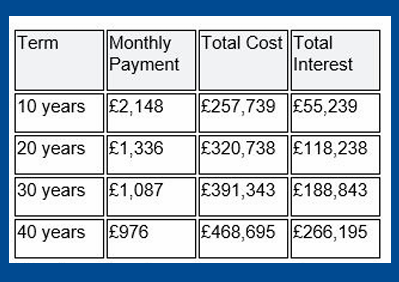
This shows how longer terms can reduce your monthly bill but increase the total interest you pay.
Can You Change Your Mortgage Term?
Yes, you can adjust your mortgage term in some cases. For example to:
Extend it to lower your monthly payments (helpful if finances are tight)
Shorten it to pay off your loan faster and save on interest
Changing your term often requires approval from your lender, which may involve affordability checks.
Reducing Your Mortgage Term Through Overpayments
If your lender allows it, overpayments on your mortgage can reduce the total interest and shorten the term. Many lenders allow overpayments up to 10% of your loan balance annually, but check for early repayment fees before doing this.
Age and Mortgage Terms
Younger borrowers can typically choose longer terms, especially if they’re in their 20s or 30s and have many working years ahead.
However, lenders consider your retirement plans to ensure repayments remain manageable later in life. Most lenders cap terms at 40 years.
Get Help from Mortgage Professionals
Finding the right mortgage term can be tricky, but you don’t have to figure it out alone.
Mortgage advisers or brokers can offer personalised advice based on your financial situation and goals. They’ll help you weigh up costs, repayment plans, and other product options.
Understanding mortgage terms doesn’t have to be overwhelming. With a little planning and the right advice, you can choose a term that suits your needs while staying in control of your finances.
Need tailored advice to help you understand the right mortgage term for you? You can book a call with our recommended mortgage adviser here.
Final message from the team
To put it simply, the mortgage term you select will influence both your monthly repayments and the overall interest you’ll pay throughout the duration of the loan. You’ll usually have the option to choose between a capital repayment mortgage or an interest only mortgage.
Altering the length of your mortgage term can impact both your affordability and how lenders evaluate your application. Overpayments can help reduce your mortgage term, though be mindful as this could result in early repayment fees.
Additionally, your age plays a significant role in determining the term lengths available to you.
Please note: SBK is not authorised to give financial advice; the information and opinions provided in these articles are not intended to be financial advice and should not be relied upon when making financial decisions. Please seek advice from a regulated mortgage adviser.
Got any ideas how we can improve this guide or process? Please share them marketing@sheldonbosleyknight.co.uk